

Table of Contents
- Why Digital Art Is Cheaper Than Traditional Painting
- Initial Investment and Hardware Requirements
- Consumable Costs: Digital vs Traditional Materials
- Software Subscription Models vs One-Time Purchases
- Is Digital Wall Art Worth It for Home Decor
- How to Print Digital Art at Home
- Digital Art vs Traditional Art Cost Comparison
- Hidden Costs and Long-Term Value
Last Updated: August 24, 2026
Why Digital Art Is Cheaper Than Traditional Painting
The cost difference between digital art and traditional painting is fundamental. Once you invest in initial hardware, digital art becomes exponentially cheaper to produce. A single tube of quality oil paint costs £8-15 and covers perhaps a dozen paintings before running out (the American Academy of Dermatology). A digital brush costs nothing after your initial software purchase and never depletes. This reality has shifted how artists think about creating and selling their work.
At Thistle and Ink Art, we've seen this play out across our customer base: renters and homeowners increasingly choose digital artwork because they can access professional-quality pieces instantly without the physical storage, materials waste, or space constraints that traditional art demands. The real question isn't whether digital art is cheaper, it demonstrably is, but understanding where those savings come from and whether the cost advantage translates to better value for your specific needs.
Initial Investment and Hardware Requirements
Starting with digital art requires upfront hardware investment. You'll need a drawing tablet (£30-50 for entry-level, £100-300 for mid-range, £500-1500 for professional), a stylus, and a capable computer (£400-1500). Traditional painting's upfront costs feel lower, a basic acrylic set costs £20-40, but serious painters quickly invest in professional supplies, reaching £200-400 for a modest collection.
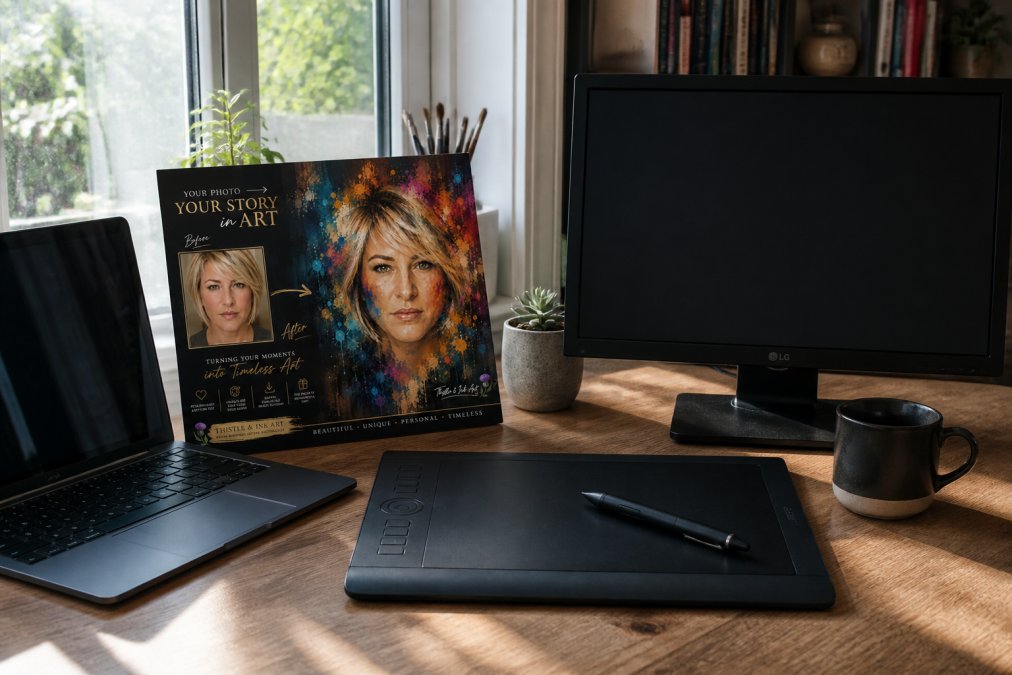
The key difference is that digital hardware is genuinely one-time. A drawing tablet lasts five to ten years (peer-reviewed research). Once paid for, the marginal cost of creating each new piece drops to near zero.
Consumable Costs: Digital vs Traditional Materials
This is where digital art's financial advantage becomes overwhelming. Traditional painting requires constant material replenishment: canvas (£5-20), oil paint tubes (£8-15 each), brushes (£10-30), solvents, mediums, and gesso. A working traditional painter spending four hours weekly spends £50-150 monthly on consumables, £600-1800 annually.
Digital art eliminates this entirely. Once you've purchased software, creating new pieces costs nothing in materials. No canvas, no paint depletion, no brush replacement. Fifty digital paintings or one costs the same: zero.
| Cost Category | Traditional Painting (Monthly) | Digital Art (Monthly) |
|---|---|---|
| Canvas/paper | £15-30 | £0 |
| Paint/ink | £20-40 | £0 |
| Brushes and tools | £5-15 | £0 |
| Solvents and mediums | £5-10 | £0 |
| Software/subscriptions | £0 | £5-15 |
| Total Monthly | £45-95 | £5-15 |
Over twelve months, traditional painters spend £540-1140 on consumables. Digital artists spend £60-180 on software.
Software Subscription Models vs One-Time Purchases
Your software choice determines whether digital art remains cheap long-term. Subscription-based software like Adobe Creative Cloud costs £54.99 monthly (£660 annually), creating permanent obligations. One-time purchase options like Affinity Photo (£70), Clip Studio Paint (£50 perpetual license), or Procreate (£12.99) offer fixed costs. Free alternatives like Krita provide professional-grade tools at zero cost.
The financial implication is significant: subscription costs compound over time, while one-time purchases remain fixed.
Is Digital Wall Art Worth It for Home Decor
For renters and homeowners, digital wall art offers exceptional value. A custom oil portrait from a traditional artist costs £500-2000 (the American Academy of Dermatology). A handmade watercolour piece runs £300-1500. Digital art sidesteps material costs entirely, which is why services like Thistle and Ink Art offer personalised digital portraits starting at £8.99.

Digital art provides flexibility traditional paintings don't: print the same design in multiple sizes, adjust colours without commissioning new work, and store dozens of files on a laptop. For renters specifically, digital wall art is transformative, print on demand, frame affordably (basic frames cost £10-30), and remove without damage when moving.
How to Print Digital Art at Home
Printing digital art at home crystallises the cost advantage. Start with a high-resolution file (300 DPI minimum) and print to your home printer using quality photo paper (£0.30-0.50 per sheet). A4 prints cost roughly £0.50-1 in materials.
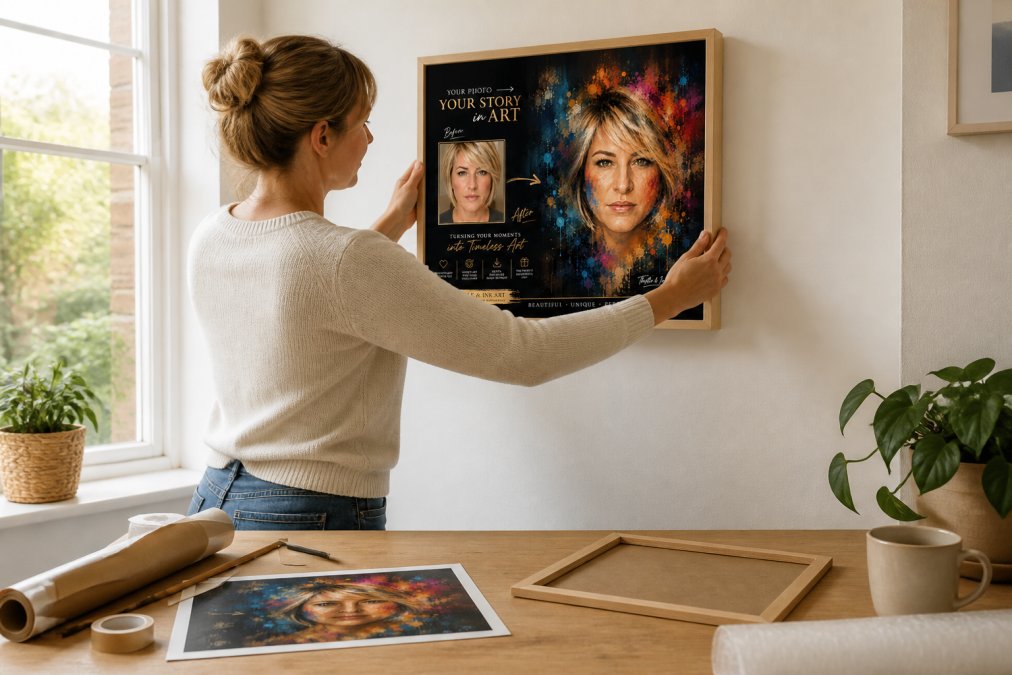
For larger prints, online services like Photobox or Snapfish offer A3 prints (£3-8) more economically than home A3 printers (£200-500). The critical factor is file resolution, 72 DPI (screen resolution) will look pixelated when printed. Reputable digital artists deliver files at 300 DPI to ensure crisp, professional prints.
Basic frames from IKEA or Dunelm cost £8-25. Premium frames run £30-100. Total cost for a framed, printed digital artwork typically ranges from £15-50, a fraction of commissioning traditional painting.
Digital Art vs Traditional Art Cost Comparison
The comprehensive cost picture shows why digital art is cheaper across nearly every metric for home decor and commissioning:
| Metric | Digital Art | Traditional Art |
|---|---|---|
| Initial hardware | £100-500 | £50-200 |
| Monthly consumables | £5-15 | £45-95 |
| Software costs | £0-660/year | £0 |
| Cost per finished piece | £0-5 | £30-100 |
| Revisions/corrections | Free | Costly or impossible |
| Storage requirements | Minimal (digital) | Significant (physical) |
| Time to delivery | Hours (instant download) | Weeks (creation + shipping) |
For consumers purchasing finished art, the cost advantage of digital work is absolute. You're not paying for canvas, paint, framing labour, or shipping physical objects.
Hidden Costs and Long-Term Value
Digital art's cost advantage is real but not absolute. Hardware depreciates over five to ten years (roughly £30-60 annually for a £300 tablet). Software obsolescence poses risks, proprietary formats can become inaccessible, and subscription cancellation means losing access to files. Traditional paintings remain accessible indefinitely.
Resale value differs substantially. Original oil paintings retain or appreciate in value through scarcity and provenance. Digital files have diminishing resale value once distributed, though licensing models exist. Time-to-market efficiency favours digital work financially, artists complete commissions within days rather than weeks, enabling higher earnings potential.
The real hidden cost is learning digital tools. Traditional painting has a gentler learning curve for beginners, while digital art requires understanding tablets, software, and file formats. This learning investment is one-time; once mastered, the cost advantage compounds over every future piece.
Digital art is cheaper because it eliminates material waste, scales without proportional cost increases, and removes intermediaries like framers and shippers. For homeowners, renters, and gift-givers seeking affordable, high-quality artwork, digital options deliver exceptional value. Thistle and Ink Art's personalised digital portraits at £8.99, combined with affordable home printing and framing, make professional-quality custom art accessible to budgets that traditional commissions simply don't reach. The cost advantage is the reason digital art has become the default choice for anyone prioritising affordability without sacrificing artistic quality.

Frequently Asked Questions
Why is digital art generally more affordable than physical paintings?
Digital art eliminates ongoing material costs like paint, canvas, and brushes that traditional artists must continually purchase. Once you own the hardware and software, you can create unlimited artwork without additional consumable expenses. A single digital file costs nothing to reproduce, whereas each traditional painting requires fresh supplies. This efficiency makes digital art significantly cheaper per finished piece, especially for artists producing multiple works.
Is digital wall art worth it for home decor?
Digital wall art offers exceptional value for home décor. You receive instant access to high-quality artwork at a fraction of commissioning costs, with no waiting periods. The flexibility to resize, reprint, or adjust colours to match your space makes it practical for renters and homeowners alike. At prices like £8.99 for personalised portraits, digital art delivers professional-quality decor instantly, making it far more cost-effective than traditional framed art or expensive commissions.
What are the hidden costs of traditional art compared to digital?
Traditional art carries substantial hidden expenses: framing costs (often £50-£200+), storage space for unsold work, shipping and insurance for physical pieces, and depreciation of materials over time. Artists must also invest in studio space, lighting, and climate control. Digital art avoids these costs entirely. Once created, digital files require no physical storage, no framing expenses, and no deterioration. This makes the true cost of ownership dramatically lower for digital compared to traditional mediums.
How does hardware depreciation affect the overall cost of digital art?
Whilst drawing tablets and computers do depreciate, this cost is spread across hundreds or thousands of artworks created over years. A £300 drawing tablet used to create 500 pieces costs just 60p per artwork in hardware amortisation. Traditional artists face similar equipment costs with brushes, easels, and supplies that also wear out. The key difference: digital equipment depreciates slowly and supports unlimited creative output, whereas traditional consumables must be replaced constantly, making per-piece costs higher.
This article was written using GrandRanker