

Table of Contents
- What to Look for in Budget Frames for Digital Prints
- Standard Picture Frame Sizes in the UK
- Best Paper for Printing Digital Art
- How to Frame Digital Art Prints at Home
- Budget Frames That Don't Compromise on Quality
- Making Affordable Frames Look Premium
- Subscription-Free Framing: What You Actually Own
- Conclusion
Last Updated: August 25, 2026
What to Look for in Budget Frames for Digital Prints
When shopping for frames to display digital artwork, resist grabbing the cheapest option. A flimsy frame in the shop will look flimsy on your wall, and no artwork can fix that.
The best budget frames balance three things: structural integrity, visual appeal, and longevity. You're not seeking museum-quality framing, just frames that won't warp, fade, or fall apart after a year.
Consider your wall space and desired mood. A sleek black frame reads modern and minimalist; natural wood feels warm; metallic finishes add contemporary edge. At Thistle and Ink Art, we design digital prints knowing they'll end up in frames of all styles, so artwork should complement rather than compete with your frame choice.
Think about print size. Standard UK picture frame sizes, A4, A3, and smaller poster formats, are most common for home decor. Matching your digital file resolution to these standard sizes prevents awkward cropping or stretching. A poorly scaled image will look pixelated or distorted regardless of frame quality.
Finally, examine materials. Look for frames with real glass (not plastic), solid backing boards that won't bend easily, and secure corner joints. Budget frames often cut corners here, but the best ones don't. You'll pay slightly more upfront but gain years of reliable display.
Standard Picture Frame Sizes in the UK
Picture frame dimensions in the UK follow the A-series standard, making it straightforward to match digital prints to frames without guesswork. Understanding these sizes prevents printing artwork that doesn't fit standard frames.
The most popular sizes for home decor are:
A4 (210 × 297 mm), The workhorse size. Fits most digital prints and works well for single prints or gallery walls. Most budget frames are readily available at this size.
A3 (297 × 420 mm), Double the area of A4. Creates visual impact on larger walls without overwhelming a room. Slightly fewer budget frame options exist, but they're still accessible.
A5 (148 × 210 mm), Smaller format, often used for grouped displays or shelving. Budget frames at this size are abundant because they use less material.
Square formats (200 × 200 mm, 300 × 300 mm), Growing in popularity for modern, minimalist aesthetics. Budget options exist but are less standardized than rectangular sizes.
When you download digital artwork from Thistle and Ink Art, files are optimized for these standard dimensions. Printing to size means no wasted paper, no awkward cropping, and frames that fit perfectly.
The aspect ratio, the relationship between width and height, is equally important. A 16:9 ratio suits landscape-oriented walls; a 4:3 ratio works for traditional portrait orientation. Mismatched aspect ratios mean either empty space inside the frame or lost portions of artwork.
Best Paper for Printing Digital Art
Not all printing paper is equal. The paper you choose affects colour accuracy, longevity, and how the finished print feels in its frame.
Paper weight and finish options
Paper weight is measured in grams per square metre (gsm). Standard copy paper is around 80 gsm and feels flimsy (iso.org). For framed artwork, aim for 200-300 gsm minimum. Heavier paper feels substantial, resists curling, and projects quality.
Matte finishes reduce glare and suit modern, minimalist aesthetics; they're forgiving with imperfect lighting. Gloss finishes enhance colour vibrancy and create depth, making artwork pop, though they show fingerprints and reflect light noticeably. Satin finishes split the difference: subtle sheen without harsh glare, often the safest choice for general home display.
A beautiful digital print on cheap, thin paper will look cheap. The same print on quality 250 gsm matte paper transforms the entire presentation.
Colour accuracy and longevity
Colour accuracy depends on both your printer and paper. Use paper designed for your printer type; inkjet-specific paper has coatings optimized for ink absorption and colour rendering.
Acid-free paper resists yellowing and deterioration over time. Archival-grade paper, designed to last decades without fading, costs more but is worth considering if you're framing prints you genuinely care about. Once framed and hung away from direct sunlight, most prints remain vibrant for 5-10 years with standard materials (peer-reviewed research).
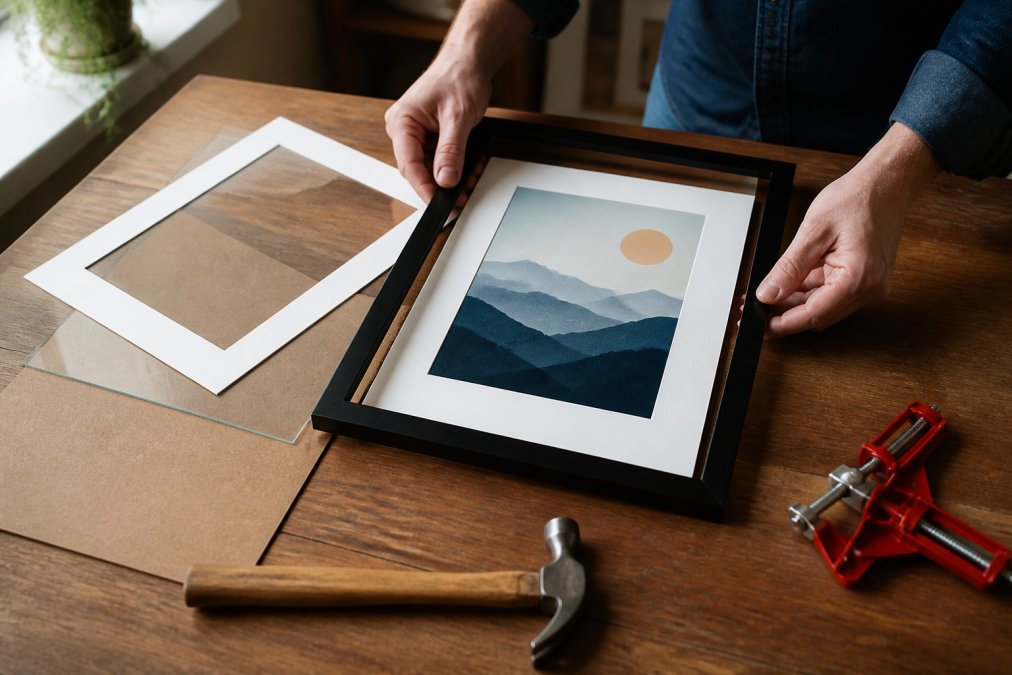
How to Frame Digital Art Prints at Home
Framing your own artwork is simpler than most people assume. The process takes 20-30 minutes once you've gathered materials (ala.org).
Assembling your frame step-by-step
Step 1: Prepare your materials. Lay out your frame, print, mat board (if using one), backing board, glass, and tools. Check that the print fits the frame dimensions before assembly.
Step 2: Clean the glass. Dust and fingerprints trapped inside the frame are impossible to remove later. Wipe glass with a soft, lint-free cloth.
Step 3: Layer the components. Place the glass in the frame first. Lay your print face-down on the glass. If using a mat, position it over the print. Add the backing board last.
Step 4: Secure the backing. Most budget frames use small tabs or points that fold over the backing board. Gently fold these tabs down, pressing evenly. Don't force them.
Step 5: Hang and step back. Install the hanging hardware on the back of the frame, then mount it on your wall.
Common mistakes to avoid
Don't rush assembly; dust trapped inside is visible and frustrating to fix. Don't assume your print will fit without measuring. Avoid over-tightening fasteners, which can crack glass or warp backing boards. Don't hang framed artwork in direct sunlight, as UV exposure fades prints over time. Finally, don't assume cheaper frames are inherently worse; many budget frames use the same materials as mid-range options.
Budget Frames That Don't Compromise on Quality
The difference between a frame that lasts and one that falls apart often comes down to small details. Look for frames with real glass rather than acrylic; glass resists scratching and maintains clarity. Check that corner joints are reinforced, not just glued.
Wooden frames in natural finishes offer warmth and versatility. Metal frames (aluminium or steel) feel contemporary and resist warping. Composite frames (plastic with wood veneer) are the most budget-friendly but often feel hollow. Solid wood or metal frames offer better longevity.
Consider wall-mountable design. Frames with reinforced hanging points won't shift or tilt after months on the wall. Many budget frames come with basic backing boards that bend easily; upgrade to sturdy foam or cardboard backing if your frame allows it.
When shopping, physically inspect frames if possible. Open the frame, check the glass for defects, and test the corner joints. Frames that feel cheap usually are.
Making Affordable Frames Look Premium
A gallery wall of budget frames can look expensive if you approach styling intentionally.
Start with consistent spacing. Measure the distance between frame edges and maintain it throughout your arrangement. Aim for 5-8 centimetres between frames for a cohesive gallery wall.
Choose frames in a unified colour palette. Stick to one or two finishes, perhaps natural wood paired with matte black, or all white frames. This creates visual harmony.
Mix frame sizes intentionally. Alternate between A4 and A3 sizes, or include a few A5 prints as visual punctuation. Asymmetrical arrangements feel more intentional and modern than rigid grids.
Lighting transforms perception. A gallery wall lit by soft, angled lighting looks more curated than the same frames in harsh overhead light.
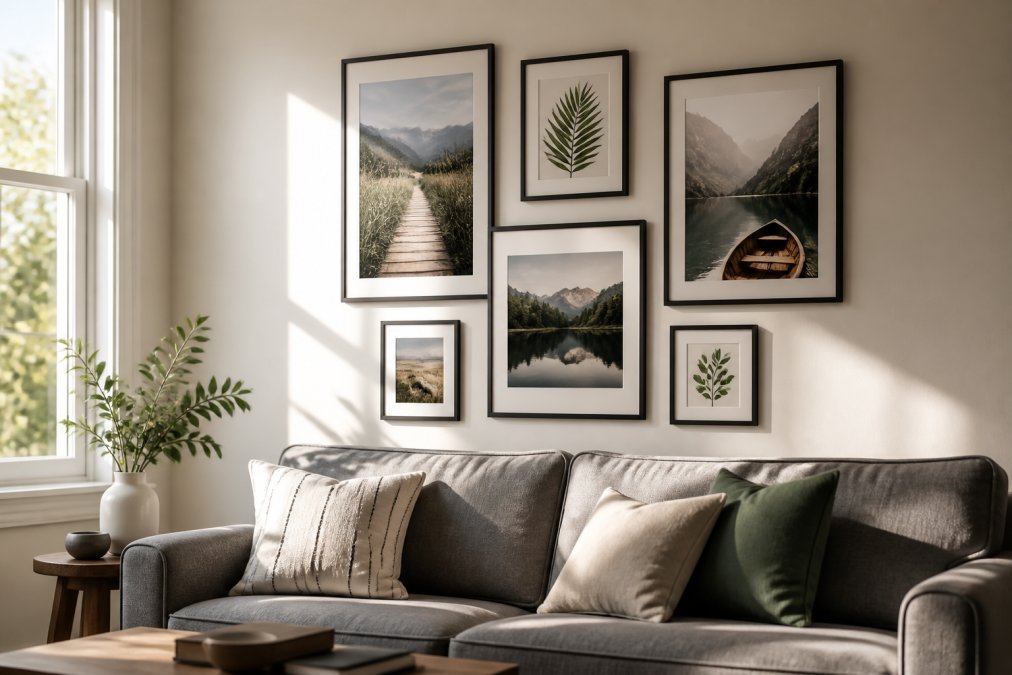
Thoughtful art selection makes budget frames recede into the background. Thistle and Ink Art's curated collection includes pieces designed to work in gallery arrangements, modern abstract prints pair well together, Scottish-inspired artwork creates thematic coherence, and personalised portraits anchor walls with emotional resonance.
Subscription-Free Framing: What You Actually Own
When you purchase digital artwork from Thistle and Ink Art, you own the file. You download it once, print it as many times as you want, and frame it however you choose. No subscription. No recurring fees. No access revocation if the company changes terms.
Some digital art platforms operate on subscription models where you pay monthly to access artwork but never own it. Cancel the subscription and your downloads disappear. That's fundamentally different from purchasing a digital file outright.
With downloadable artwork, you control everything. Print it at home using your own printer and paper, take it to a professional print shop for higher-quality output, or print multiple copies for different rooms or as gifts. The file is yours to use indefinitely.
This ownership model also means privacy. You're not uploading artwork to cloud storage owned by another company or creating an account that tracks your purchases. You download the file and store it however you prefer.
If you're buying digital artwork as gifts, ownership clarity matters. A gift of a downloadable file that the recipient owns forever is more generous than a subscription-based access that expires.
Framing digital artwork at home is achievable without spending a fortune or compromising on quality. The key is understanding what makes frames durable, choosing the right paper, and assembling thoughtfully.
Thistle and Ink Art's collection of affordable digital prints is designed with home framing in mind. From Scottish-inspired artwork to personalised portraits and modern abstract designs, each piece is optimized for standard UK frame sizes and home printing. Download your artwork, print it on quality paper, frame it in a budget frame you've chosen carefully, and create a display that looks far more expensive than what you've spent.
Frequently Asked Questions
How do I choose the right frame size for a digital download?
Start by measuring your wall space and deciding whether you want portrait or landscape orientation. Common standard picture frame sizes in the UK include A4 (210 x 297mm), A3 (297 x 420mm), and 8x10 inches. Check your digital file's aspect ratio before printing, if it's 4:3, a 12x9 inch frame works well; if it's 16:9, consider a wider frame. Always measure twice and account for any mat or border you plan to add, as these affect the final visual size on your wall.
What is the best paper for printing digital art?
Matte or satin-finish paper typically works best for digital art because it reduces glare and shows colour accurately without the glossy shine that can hide detail. Look for paper with at least 200gsm (grams per square metre) weight to prevent curling inside the frame. Archival or acid-free paper ensures your prints won't yellow or fade over time. For vibrant artwork, professional-grade inkjet paper designed for fine art prints will display colour depth better than standard office paper, making the investment worthwhile for pieces you plan to display long-term.
Can I frame budget digital prints in high-street frames and have them look professional?
Yes, absolutely. Budget frames from high-street retailers work well for digital prints when you pair them with quality paper and thoughtful presentation. The key is choosing frames with clean lines, minimal visible plastic, and proper glass or acrylic to protect your print. A simple wooden or metal frame in black, white, or natural finishes suits most digital art styles. The print quality and paper choice matter far more than the frame cost, a well-printed image on good paper in a modest frame will look far better than a cheap print in an expensive frame.
How quickly can I get a framed digital print ready to hang?
Digital artwork from providers like Thistle and Ink Art downloads instantly, so you can print immediately. Printing at home typically takes 5-15 minutes depending on your printer. Assembling a budget frame usually takes 15-30 minutes if you're doing it for the first time. Total time from purchase to wall-ready is often under two hours, making digital prints ideal if you need a gift within two weeks. If you prefer professional printing and framing, allow 5-10 working days depending on your print provider's turnaround time.
This article was written using GrandRanker